CATCH Canine Trainers Academy Blog

Why do Dogs Forget Obedience they Know?

Life Rewards Make Obedience Stick

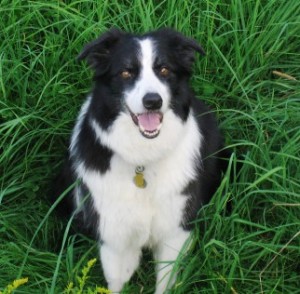
“I’m a good girl, can I go out now?”

One of our students recently asked me a great question about “life rewards”. Before I tell you the question and the answer – let’s quickly review this useful concept for dog training. Life rewards are anything your dog loves, that you can reward him with during everyday activities. Classic life rewards are opening doors to go outside, giving a belly rub, or playing a game of tug with a toy or a stick – whatever is available! Anything your dog loves can work. Using life rewards is a powerful way to maintain your dog’s obedience and manners. They make it so that the dog “never knows” when something great might happen, and therefore it is “always worth it” to listen.

Great trainers start using life rewards as soon as possible once a dog knows a new command. For example, once a dog learns a Sit-Stay, you begin asking for it at doorways and make the reward the opening of the door. This example brings us to our student’s excellent question. She asked:

Why do dogs have a hard time when you first switch a trained behavior over to life rewards?

The reasons a dog suddenly “forgets his obedience” when you first start using life rewards can be any or all of the following:

  1. You are likely in a new situation, so the dog has to generalize the behavior to this new situation (remember, dogs don’t generalize well).
  2. There may not be any of the usual “signs of training” present, such as treats or toys you may have used when first teaching the behavior.
  3. The dog is used to getting whatever is in the offing for free, so he doesn’t yet have any motivation to perform a behavior in order to earn what is in the offing (e.g., you usually open the door with no requests and no delay).

Back to our example: Let’s say you have a dog that has learned a great Sit-Stay from all your practice in the living room. He has been rewarded many times from your treat pouch for long Stays, for Stays where you go out of the room, even for Stays where you bounce a ball in front of him. But, now you ask him to do a Sit-Stay in front of the door just before you go out for a walk.

  • Point 1 above: He has never done a Sit Stay in this area of the house before, and especially not when he is this excited to do something (get outside).
  • Point 2: Plus, he doesn’t see or smell any treats, so he is not motivated by that AND he is not reminded of his behavior repertoire by that (two different functions of treats).
  • Point 3: Finally, he has never had to listen to anything before in order to get outside, so he doesn’t “get it”. He may even get frustrated and throw a little tantrum – the stress/arousal makes it even harder for him to focus and comply.

So, there you have it – obedience falling apart when you first try to use life rewards. The good news is that a persistent trainer will find that dogs catch on very quickly to the life rewards game. The hallmark of a good trainer is that you are more patient and persistent than the dog! A few trials where you insist that the life rewards don’t happen without the behavior being performed first – will do the trick.

Happy training. Let us know how it goes for you and get in touch if you’re serious about learning more.

Your Jump is Not My Joy!

How do I get a Dog to Stop Jumping?

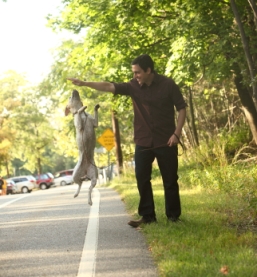
Your dog jumps for joy – but you’re not having fun.  Jumping can drive dog owners (and their guests) crazy.  People get scratched, sweaters get pulled, and kids get knocked over.  Even the little breeds can ruin a nice pair of pants after a mud run in the yard.

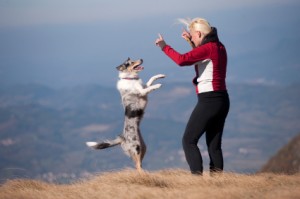
Training this kind of jumping is fun! But dogs jumping ON people can get old, fast.

Dog trainers are called in to “fix” jumping all the time.  So, what do we do?

First, start with management. In dog trainer terms, management means to set up the situation so the dog can’t fail.

In the case of jumping, management ideas include:

  • Hold the dog back on leash
  • Put the dog in a crate for a few minutes
  • Put the dog behind a gate for a few minutes

These techniques don’t train the dog not to jump. But, they stop it now, and they keep the bad behavior pattern from growing stronger through repetition.

Once management is in place, let’s look at two basic training options.  Before we get into this, it must be said that you should always apply your own common sense to training instructions.  Think about your situation with your individual dog or clients and tailor the ideas found here accordingly.  Never hurt the dog or yourself!  Whenever you’re unsure, get a pro trainer on board.

Training, Part 1

The first technique to re-train jumping is a proactive and powerful form of ignoring it:  body block the dog.  This means you step forward, firmly but carefully, into the dog’s space.  You can do this as the dog jumps or just before.  Most dogs will back up.  Dogs “get it” quickly with body blocks because now you are speaking their natural language – body language.  Without you saying a word, when you move forward your dog will sense you saying, “This is my space, back out of it”.

Do NOT use your hands when body blocking – fold your arms and step forward.  Make contact with your legs and body only.  Using your hands will be seen as a form of play (think of dogs paw thwacking one another playfully).

Training, Part 2

Once you have shown the dog that jumping results in body blocks, not attention, you can work on training a new behavior that a dog can’t do at the same time as jumping.  This technique takes some work, but it is extremely effective.  Asking a dog to do nothing is next to impossible, but teaching them something else to do works great.  “Spin” is a great behavior, since it is active and uses up that aroused energy, rather than trying to get the dog to calm down.  Fetching a toy or going to place are great options, too.

A common mistake is to teach Sit instead of jumping.  Sit is usually not a good choice, because most dogs will sit for one second and then spring back into jumping!  Whatever new behavior you choose, work to get it on command during quiet times before you practice with guests arriving.  Keep your leash handy for back-up management.  Some dogs may need quite a bit of practice before they stop jumping for joy!

Learn More Pro Training Skills!

How to Burn that Crazy Canine Energy!

So Much Energy, So Little Time

Every dog owner knows that exercise keeps a dog healthy in mind and body. The trouble is, most of us can hardly find the time to exercise ourselves, let alone our pets!  Many owners have learned the hard way that they MUST find a way to burn their dog’s energy, or it will burn them. The good news is that exercising your dog can be easy if you follow our 3 tips and add plenty of imagination.

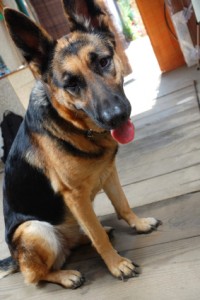
Keep me busy or I make you crazy. The choice is yours.

1) In or Out – Use All You Can

There is no rule stating that you have to exercise your dog outside.  A flight of stairs can serve as an excellent place to intensify the energy burn on a simple game of fetch.  Unless you have a Border Collie or a Siberian Husky, this exercise will knock the average dog out pretty quickly, so it’s a small time commitment. A game of tug or fetch while you sit on the couch is easy and always appreciated by housebound hounds.

2) Bring Your Dog Along

Not everyone is a runner, and a brisk walk doesn’t do a whole lot to wear out a dog.  If you happen to enjoy riding a bike or roller-blading, hitch your dog up and hit the pavement!  You’ll be amazed at your dog’s athletic ability, and how calm she’ll be when you get back home. Note: Before giving this a try, it’s important for your dog to have good on-leash manners. Or… get off the pavement. If your dog has a good recall, how about a walk in the woods off-leash? You’ll be amazed at how much energy your dog will burn on her own if you just get rid of that leash.

3) Take Advantage of Other Dogs and Interactive Toys

Nothing wears a dog out like another dog.  Use the canine companions in your neighborhood!

  • Visit the dog park
  • Have a “doggie playdate” with a friend who has well-socialized dogs
  • Enroll in puppy socialization classes or a local daycare

When there are no dogs to play with and you don’t have ANY time to exercise, use interactive toys. There are a huge number of food-puzzles on the market.  These are designed to work a dog’s mind by engaging their instincts to search for, manipulate, and chew stuff! Check out the Busy Buddy, the Kibble Nibble, Nina Ottosson and many others. These give a dog a great opportunity to burn mental energy with problem-solving, and can make mealtimes interesting and productive.

The Wrap:

It’s not always easy to find time to keep your dog’s mind and body well-maintained, but there are options!  Through a combination of creative thinking and taking advantage of your environment, you can burn a lot of energy in a little time.  Your dog will thank you, both in spirit and with good behavior.

Growls and Barks and Whines, Oh My! Part 3

Growling at Me?  What Do I Do?

In Part 3 of our “Growls and Barks” series, we look at the most disturbing noise of all – a dog growling directly at you.  If you’ve ever had your own “best friend” growl at you, you know it can bring on a flood of emotions: anger, sadness, and confusion.  Even behavior experts have a hard time not taking it personally when their dogs growl at them. Keep a cool head, though. A growl is just a warning, and it’s a natural part of canine communication that you need to understand.

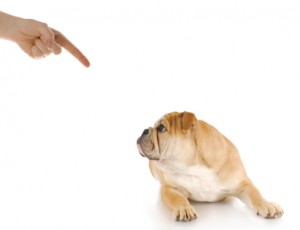
Scolding is a natural reaction but it can backfire.

When a pet dog growls it is often protecting a coveted resource, like a food item or a favorite resting spot.  This is called resource guarding.  Dogs will also growl if they don’t want their body to be touched or disturbed. This can happen with fearful dogs that aren’t used to handling, are wary of a child or stranger, or sometimes if a dog is ill or in pain.

In both examples above – resource guarding and body-sensitivity – growling is a warning signal that the dog may bite if pushed further. Believe it or not, you should be thankful if your dog gives you this warning signal! It means he prefers NOT to bite. He wants to avoid the situation going any further. So don’t push it. Why teach your dog to escalate?

Many pet owners react to growling with aggression of their own, yelling at the dog or reacting with a more intense version of scolding. This seems natural, but it usually makes the situation worse.

Here’s why you NEVER want to punish a growl or other defensive threat:

  • Growling is an ALL IMPORTANT WARNING SIGNAL that a bite could come next. If you punish warning signals the dog will likely bite without warning in the future. That’s dangerous.
  • Punishing growling can backfire. Some dogs will act more submissively after being punished, but others will become more defensive, ready to bite faster or harder the next time in order to protect themselves (understandably). Still others may be submissive to the one person who punished them, but learn not to trust people in general and end up taking it out on a less intimidating person in the future.
  • Punishing the growling is ignoring what really matters – the trigger. You need to focus on what triggered the dog to issue a warning. Once you identify this trigger, you can safely avoid bites and now you know what you need to work on to change the dog’s behavior for the future.

When a threatening growl is directed at you or others, get help from a professional. Unless you are a dog behavior expert, get in touch with one and have the situation assessed. You and the trainer should first work to figure out what triggers the dog to growl. Then, make a plan to safely manage trigger situations going forward.  Finally, your trainer will determine the best process for changing the dog’s outlook on these trigger situations going forward (create a behavior modification plan).

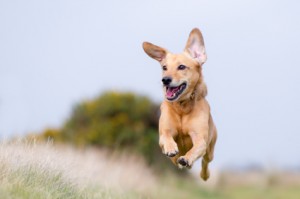
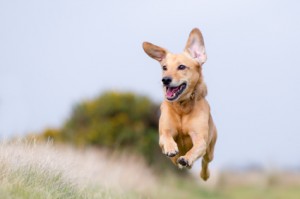
I leap, I bark, I am dog.

The Wrap on Our Growls and Barks Series:

Dogs are animals, and animals make noise.  Even fun play can be loud and growly. Dogs that have a time and a place to be loud are less likely to be loud inappropriately by human standards. Part of dog talk is also letting others know when you’re uncomfortable. That’s what a threatening growl is – a warning that the situation is going bad, so let’s cool it down. Accepting that your dog is going to “talk”, and tuning into what she’s trying to say will go a long way towards a happy, healthy and safe relationship for everyone.

Great Dog Training Tips from Our Facebook Page

Create a Nickname!

You called?

Does your dog tune you out?  It’s time for a new nickname. Pick something short and sweet (1-2 syllables). Start saying the NICKNAME a few times a day, immediately followed by something your dog loves: treats, play, walks.

NEVER use the NICKNAME before doing anything your dog hates.

Pair the NICKNAME with positives as often as you can.

Within a week, you’ll be able to use the NICKNAME to get your dog’s attention in a SNAP!

Join our Facebook community here

Growls and Barks and Whines Oh My! Part 2

Oh No, Is that a Fight?

Last month we talked about how dog trainers appreciate a dog that wears his heart on his sleeve and lets you know what he’s thinking with his vocalizations.  In Part 1 of this “Growls and Barks” series, we looked at the meaning behind growling during tug-of-war games.  In Part 2, we’ll look at the reasons why a dog might be noisy (or communicative) in dog-dog play – and how to interpret this in the best interests of you and the dog.

Raucous Rumblin’ and Tumblin’

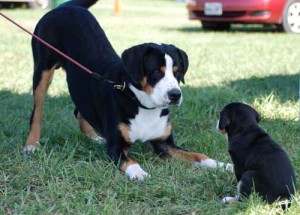
A classic play bow. What a wonderful way for the big guy to greet this submissive little pup!

If your dog barks and grumbles while chasing and wrestling with other dogs at the park, is she out for blood? Not usually! Good dog play can get noisy.  Barking, growling, wrestling, pawing, and pouncing are all aspects of normal, healthy dog play.  Even jaw-sparring with lots of “fangs” exposed can be a form of play. Doggie parents who coddle their “babies” and don’t allow them to “speak dog” are not doing their dogs any favors.  Dog language is something that must be learned from other dogs, so safe interactions with their own kind actually helps dogs develop needed social skills.

How do you know if loud vocalizations are play or signs of a potential fight?  Watch for the metasignals dogs use to tell each other that “we’re not serious” even though we look like we are.

Play signals that are easiest to see include:

  • Play blows: head down, rump in the air (and many subtle variations on this theme)
  • Role reversals: you chased me, now I chase you; or you were on top, now I’m on top
  • Rocking-horse gait:  bouncy, goofy, up-and-down running that looks like a rocking horse

Another sure sign that two dogs are having fun is if they both keep coming back for more. For example, let’s say you have a wrestling match where the dog on the bottom just can’t seem to get up. Try this test: gently pull back the dog on top and restrain her for a moment. If the dog that was on the bottom runs off or hides, then he was overwhelmed.  But, if he comes right back up to the dog you pulled off, ready for more wrestling – then they were both enjoying the play!

Part 1 – What’s All the Noise About? The Tugging Terror

CATCH in Dog Fancy – “The Authority on All Things Dog”


We’re Gettin’ Fancy

CATCH Canine Trainers Academy and our School Director, David Muriello, make an appearance in the October issue of Dog Fancy magazine!

Check out the Everyday Dog section for relationship tips that work “when you only have a minute” – how to make it count.  This is an always-interesting and informative section with great writing by Dog Fancy journalist, Lynn. M. Hayner.

Growls and Barks and Whines, Oh My! Part 1

What’s All the Noise About?

Most dog trainers appreciate a dog that wears his heart on his sleeve and lets you know what he’s thinking with his vocalizations.  On the other hand, your average dog owner isn’t tuned into the subtle meaning behind dog sounds, and often wants their dog to “just be quiet”.  Why?

It’s simple.  To the average pet owner, a dog that makes noise is at best, a nuisance, and at worst, a threat of aggression.  In this 3 part series, we’ll look at the reasons why a dog might be noisy (or communicative) – and how to interpret this for your best interests – and the dog’s.

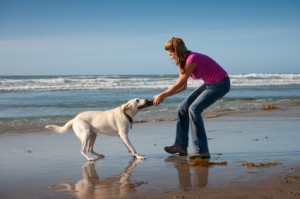
A struggle or a game? It depends on how you train it.

The Tugging Terror

If you’re playing tug-of-war with your dog, and he starts growling as he yanks like a maniac, do you think he’s threatening you?  Chances are he’s not mad, he’s excited! Giddy like a born predator getting to practice an innate skill. Tug of war is a fantastic energy-burner for dogs. It mimics an ancient tradition of tearing apart a fresh kill with a pack mate (don’t worry, you can keep it on the stuffed animal level).  If you practice rules of politeness and safety, tug can be a cooperative game that builds your bond while teaching the dog obedience and self-control. 

Good rules for tug include:

  • Dog “outs” (releases toy) on command
  • No mouth on skin or clothing, ever
  • No taking the toy from your hand without permission, ever

It’s true you should avoid games that get your dog over-aroused if you’re not going to teach and enforce the rules.  That will end up rewarding a dog for being out of control. But, if you practice games with rules while your dog is growly/playful/excited, it makes it easy for him to show manners during times of high arousal.  Plus, you get the added benefits of big-time energy release and the two of you having fun together. Giving your dog a chance to “go nuts” with you and his toys makes it less likely he’ll do so on your furniture, yard, and neighbors.

For more on how to teach your dog the rules for tug, read the article here called Tug of War – The San Francisco SPCA.

Does Your Dog Have the Olympic Spirit?

“Stay cool, people. Stay gold.”

How Many Dog Lovers Does it Take?

It Takes a Village

We’ve all heard this phrase and know how it applies to raising children, but most dog owners don’t realize it’s the same with dogs. If you’ve ever raised a puppy you know how hard it is to teach them good manners when other people reward bad manners! Every time you walk the cute little bugger down the street, well-intentioned people give your pup love for jumping in their faces.

Raising a well-socialized, polite dog takes the patience and determination of EVERYONE in the dog’s life, from family members to strangers. Follow these tips to make sure the road to your dog’s rude behavior isn’t paved with the good intentions of the people around her.

We know how to raise great dogs!

1) Make sure everyone who greets your dog does so in the manner that you and your dog are comfortable with.

Shy dogs can become even more fearful if they are overwhelmed by people who come on too strong. When people greet your dog, advocate for your dog first, and educate friends and neighbors on the best way to approach. Tell people to allow the dog to close the distance between them, while they avoid direct eye contact. If your dog is nervous, new people can throw small treats (from a few feet away) to encourage your dog to come explore them. Since the average person can’t stand still and resist a shy dog, giving them the job of tossing treats will actually be a good distraction for the human!

Some dogs are the exact opposite of shy.  If yours is rambunctious and closes the distance in half a second while leaping up to lick a new friend’s face – make sure the humans know not to reward this behavior. Most people will say, “I don’t mind, I love it!” That’s your cue to explain that you understand, but you need their help in raising a well-mannered dog. Even the occasional rewarding of behaviors like jumping will make them very hard to extinguish. Educating everyone around the dog is key!

2) Don’t be afraid to say no.

When socializing a dog, it is ideal for him to come into contact with the broadest spectrum of people and experiences as possible. However, there are occasionally people in your neighborhood or the public who don’t need to be in your dog’s circle. Perhaps you’ve put hard work into your dog’s greeting behaviors and you routinely meet someone who does not take your efforts seriously.  This person continues to teach your dog bad habits while blatantly ignoring your requests. The way to handle this person… keep walking! It’s ok to refuse people if it is in the best interest of your dog.

It does get a bit trickier if the person teaching your dog bad behaviors is your husband or roommate.  Which leads to our next point…

3) Housemates and family must be consistent.

A dog raised in an environment with more than one person will learn at warp speed whether or not all household members follow the same rules. If not, it’s a tough road to good manners. It is common to have family members or roommates who want the dog in the house to be polite, but don’t take the responsibilities of teaching the dog seriously. One of the best ways to get housemates on board with this is to tell them that their help will make a big difference. Tell them you’ll do the heavy lifting, but at the very least they need to understand what not to do so that they don’t ruin all the work you put in. Ask them to do this minimum amount of work consistently, and it will make a big difference in everyone enjoying a more polite dog.

For example, if Mom is working on Sparky being rewarded with a ball toss every time he sits or lays down politely, Dad can’t humor Sparky and throw the ball every time Sparky barks in his face or nudges his leg.  Always make sure those in your dog’s circle are on the same page.

The Wrap:

Consistency goes a LONG way in dog training, and conscious or unconscious rewards are very powerful, for better or worse.  Get everyone in your dog’s life on the same page and whenever you can, avoid misfits who can’t help but teach your dog bad manners.

Like us on Facebook
Follow us on Twitter
Can’t get enough of learning about dogs?  Check Out Our School for Aspiring Dog Trainers


CATCH Canine Trainers Academy Office Headquarters
24 Newark Pompton Turnpike Suite 206, Little Falls, NJ.
Phone: 877-752-2824